_89551.jpg)
The study - conducted by Tractebel and Technopolis and commissioned by the Province of Zeeland, Impuls Zeeland and VNO NCW Brabant Zeeland - outlines how companies in Zeeland, one of the preferred locations for new nuclear reactors, can position themselves within the nuclear supply chain and benefit from future investments.
Conducted between July 2025 and January 2026, the analysis explored prospects primarily for large nuclear new build projects, as well as for small modular reactors (SMRs) and the lifetime extension of the existing Borssele nuclear power plant.
The study identified 130 Zeeland businesses that could potentially supply nuclear projects, mostly as component suppliers and subcontractors. "Opportunities are strongest in construction, infrastructure, and transport & logistics, and during early construction phases and site clearance/landscaping," it says. "As a first estimate, local involvement could account for roughly 15% of total plant costs."
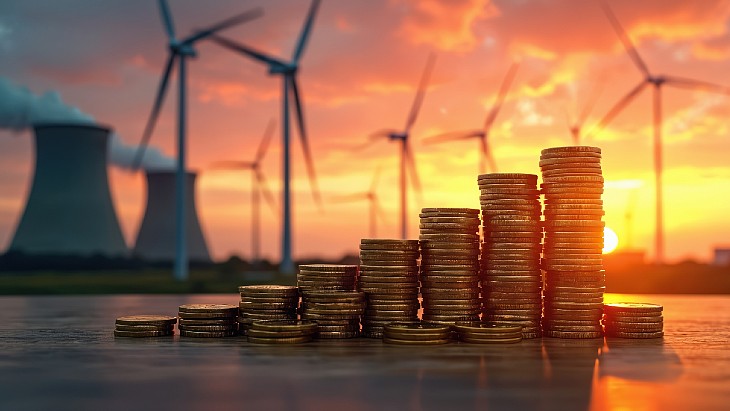
The direct economic potential for the business sector in Zeeland is estimated to be between EUR3.1 and EUR4.6 billion over a 12-year construction period. Direct economic benefits emerge from the direct supply to nuclear power plants, whether under construction or in operation. "The actual order size that can land in Zeeland will strongly depend on various factors, including the technology vendor chosen," the report says. "This estimate should therefore be considered a first estimate based on best available data and assumptions at this stage of the nuclear new-build project in the Netherlands." The indirect economic potential (resulting from regional spending of businesses directly involved in the supply chain and of on-site workers or visitors) for the business sector in Zeeland is estimated to be around EUR1 billion.
"Given the opportunities for Zeeland businesses in the nuclear supply chain, we recommend positioning Zeeland as a hotspot for nuclear energy and actively promoting its businesses in new-build projects," the study says." Stakeholders should be informed about nuclear developments, supply opportunities, and requirements, while businesses should be connected regionally, nationally, and internationally, and regional and national governments should align business support activities. Support should be provided to establish the right ecosystem for Zeeland companies to enter the nuclear domain, including further developing and implementing the proposed roadmap, backed by public and private investments.
"To facilitate this, we recommend establishing the Nuclear Delta platform, a public-private initiative bringing together businesses, government, and education institutions. The Province of Zeeland, Impuls Zeeland and VNO-NCW Brabant-Zeeland can play a part in this as well. Additionally, clear agreements with the national government should be made on conditions for hosting a new nuclear power plant, ensuring maximum economic benefit for regional businesses and reinforcing Zeeland’s ambitions as a nuclear energy hotspot."
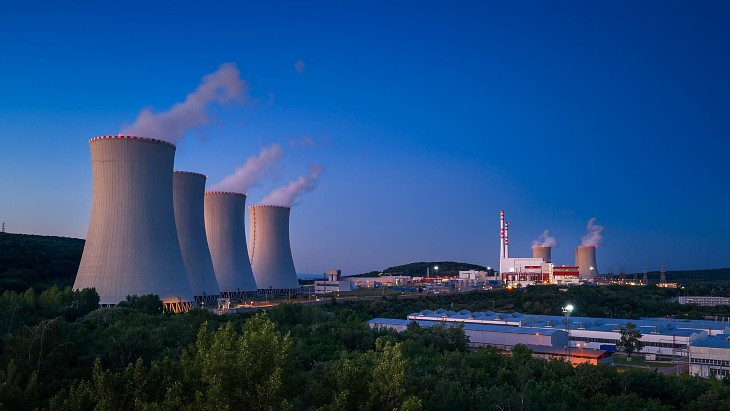
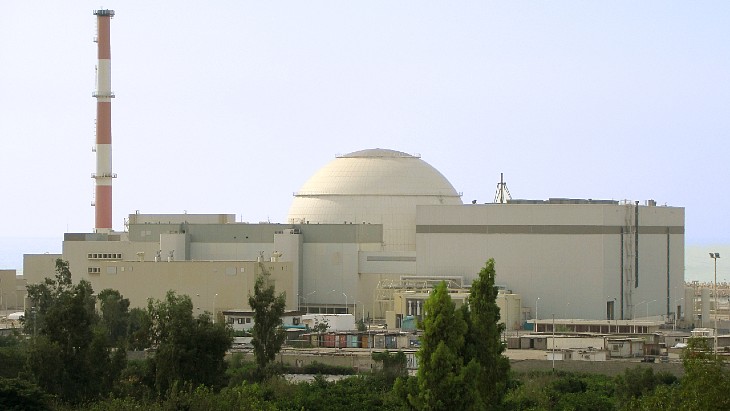
The Netherlands currently has one 485 MWe (net) pressurised water reactor at Borssele - operated by EPZ - which has been in operation since 1973 and accounts for about 3% of the country's total electricity generation.
In December 2021, the Netherlands' new coalition government placed nuclear power at the heart of its climate and energy policy. In addition to keeping the Borssele plant in operation for longer, the government also called for the construction of new reactors. Based on preliminary plans, two new reactors will be completed around 2035 and each will have a capacity of 1,000-1,650 MWe. The two reactors would provide 9-13% of the country's electricity production in 2035. The cabinet announced in December 2022 that it currently sees Borssele as the most suitable location for the construction of the new reactors. Three other locations are also being considered for the reactors: the Tweede Maasvlakte near Rotterdam, Terneuzen in Zeeland and Eemshaven in Groningen. A location selection is expected in September of this year. The government is also taking steps to prepare the Netherlands for the possible deployment of SMRs.


_33474.jpg)
_37830.jpg)
_85344.jpg)