_65185.jpg)
The study - carried out by PricewaterhouseCoopers LLC (PwC) for Westinghouse and its owners Brookfield and Cameco - says that the construction phase of a 10-unit AP1000 fleet could generate more than USD92.8 billion of gross domestic product (GDP) for the USA and support 44,300 high-paying jobs annually for 13 years. Once operational, the 10-unit fleet would create an additional USD1.03 trillion of GDP over its 80-year lifetime while supporting 22,500 jobs annually.
The report - The Economic Impact of a Ten-Unit Westinghouse AP1000 Fleet in the United States - says that the construction phase of a 10-unit AP1000 fleet - which could power at least 7.5 million homes - would create USD54.7 billion in labour income and USD20.1 billion in tax revenues, while the 80-year operational phase would support USD329 billion in labour income and USD271 billion in tax revenues.
"As the only fully licensed, construction-ready advanced reactor available today, the proven AP1000 modular technology is the quickest way to unleash commercial nuclear power in the US to drive our nation's AI dominance globally," said Dan Sumner, Interim CEO, Westinghouse. "This report highlights that work to deploy a 10-unit AP1000 fleet can begin immediately, creating long-term economic benefits as well as high-paying, highly skilled jobs for generations to come."
At the inaugural Pennsylvania Energy Summit and Expo in Pittsburgh in July last year, Westinghouse announced plans to start construction of the first of ten new AP1000 reactors in the USA by 2030.
Four executive orders signed by President Trump on 23 May aim to support the entire US nuclear supply chain and the ambition to quadruple the nation's nuclear energy capacity by 2050. Three of the orders are firmly focused on reforms that will boost the civil nuclear energy sector. The fourth one aims to ensure the rapid development, deployment, and use of advanced nuclear technologies to support national security objectives, including AI data centres at Department of Energy facilities.
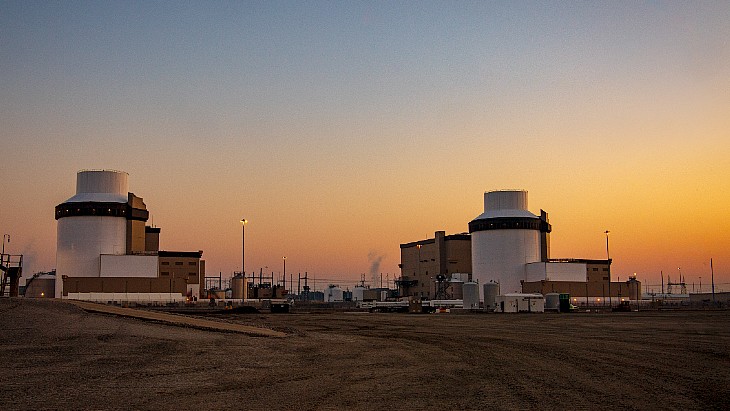
Westinghouse noted there are six AP1000 reactors currently in operation worldwide, including two units at the Vogtle plant in Georgia, with a further 14 under construction and five more under contract. The AP1000 technology has been selected for nuclear energy programmes in Poland, Ukraine and Bulgaria, and is also under consideration at multiple other sites in Europe, the Middle East and North America.
A study released in December last year - also conducted by PwC on behalf of Westinghouse and its owners, Brookfield and Cameco - concluded that completing the partially built VC Summer plant would boost South Carolina's economy by USD7.3 billion during the construction stage and, once operational, the two AP1000 reactors would add USD1.6 billion in GDP.


_22748.jpg)
_29250.jpg)