_63865(1)_58772.jpg)
The Union Budget was tabled in India's parliament on Monday by Finance Minister Nirmala Sitharaman with the key goal "to accelerate and sustain economic growth, by enhancing productivity and competitiveness, and building resilience to volatile global dynamics".
According to the budget papers the zero rate applies to goods including "[Fuel elements (cartridges), non-irradiated] for generation of nuclear power" and "Control and Protection Absorber Rods & Burnable Absorber Rods". The exemption will last until 30 September 2035, and include approved projects registered with customs by that date.
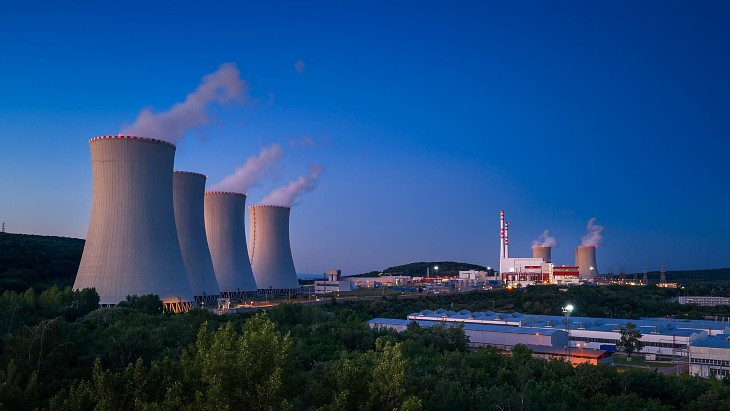
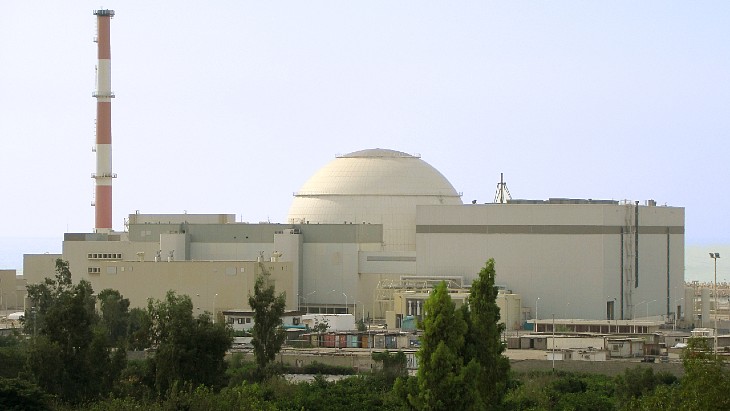
The announcement of the extension of the customs duty exemption on the import of goods related to nuclear energy comes as India ramps up its plans for a large-scale expansion of nuclear energy.
According to Parliamentary answers in the Rajya Sabha - India's Upper House of Parliament - from Minister Jitendra Singh on Thursday, the current nuclear energy capacity in India is 8,780 MW from 24 operable nuclear power plants. Four of these units are currently undergoing modernisation or refurbishment work.
He said that a further 17 nuclear power reactors with a total of 13,100 MW capacity are either under construction (7) or under pre-project activities (10) and "these are expected to be completed progressively by 2031-32". (The Indian government often classes two units at Gorakhpur where site works have begun as being under construction, although the first concrete for the reactor buildings has not yet been poured.)
The ambition is for India to reach a nuclear energy capacity of about 100 GW by 2047, with the minister saying the plan was to increase the current capacity to 22 GW by 2031-32.
A key part of India's planned expansion of nuclear capacity is the Sustainable Harnessing and Advancement of Nuclear Energy for Transforming India (SHANTI) Act 2025, which completed the legislative process on 20 December. Among other things, it opens up India's nuclear sector to participation from private companies, including in plant operations, power generation, equipment manufacturing, and selected activities such as nuclear fuel fabrication.
Minister Singh also noted that the government has announced development of five indigenous Small Modular Reactor (SMR) designs to be deployed by 2033. In the written answer he said Bhabha Atomic Research Centre "has undertaken design, development and establishment of SMRs [220 MWe Bharat Small Modular Reactor, 55 MWe Small Modular Reactor, Up to 5 MWth High Temperature Gas Cooled Reactor] and suitable for deployment as captive power plants for the energy intensive sectors, repurposing of retiring fossil fuel-based power plants, and deployment in remote location with no grid connectivity. Under the Nuclear Energy Mission, funds have also been allocated for R&D of indigenous SMRs by 2033".
There are also plans for development of fast breeder reactors in the country. He said: “BHAVINI is currently commissioning a 500 MWe Prototype Fast Breeder Reactor (PFBR) project at Kalpakkam, Tamil Nadu. Government has accorded approval to carry out pre-project activities for 2 x 500 MWe twin unit of FBR 1&2 project at Kalpakkam, Tamil Nadu. On attaining first criticality of PFBR, Government will be approached for financial sanction of FBR 1 & 2 projects."


_33474.jpg)
_37830.jpg)
_85344.jpg)