According to Budapest Public Utilities (Budapesti Közművek - BKM) and Budapest University of Technology and Economics (Budapesti Műszaki és Gazdaságtudományi Egyetem - BME): "The investment could significantly reduce the heat load on the Danube water, and in addition to a significant reduction in CO2 emissions, the country's dependence on natural gas imports would be further reduced. The district heating systems and industrial consumers of the cities near the route could also be connected to the district heating pipeline between Paks and Budapest, thus further improving energy and economic efficiency."
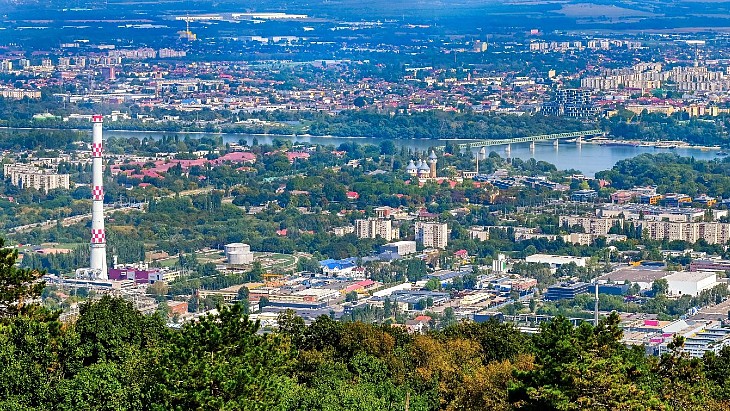
Apartment buildings in Paks, near the plant, already have a district heating system from the nuclear power plant in a scheme dating back to the 1980s.
The pipeline to Budapest would be about 125 kilometres long and BKM and BME say that "according to preliminary estimates, this could replace up to 300 million cubic metres of natural gas imports". The pipeline could run alongside the Danube.
Most power plants produce excess heat during their operation - which is why some have cooling towers - and there are a number of existing examples of nuclear power plant district heating schemes, as well as increasing interest in using this carbon-free source of heat for new district heating schemes.
BKM and BME also say that one of the supportive factors is the impact of summer heatwaves - some of the waste heat has to be partially discharged into the Danube river - and a district heating system would "relieve the Danube from significant heat load" and contribute "to reducing the amount of waste heat and diverting some of the heat generated by the power plant for useful purposes". In addition, "if Paks 2 is built, Paks will be available as a heat source until the end of the century".
The study is expected to be completed later this year.
Background
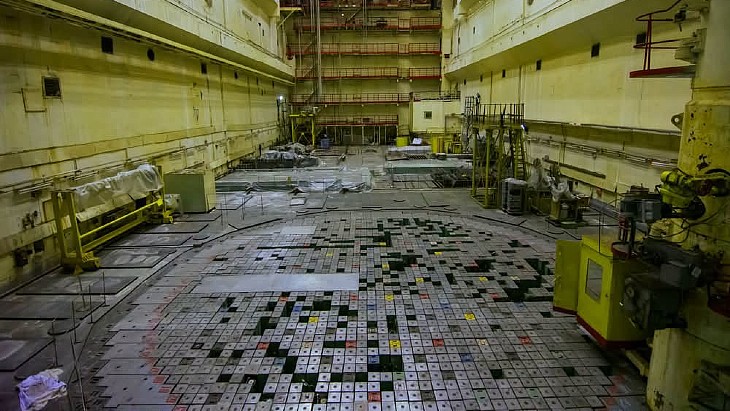
The Paks plant, 100 kilometres south of Budapest, currently comprises four Russian-supplied VVER-440 pressurised water reactors, which started up between 1982 and 1987. An inter-governmental agreement was signed in early 2014 for Russian enterprises and their international subcontractors to supply two VVER-1200 reactors at Paks - known as Paks 2 - as well as a Russian state loan of up to EUR10.0 billion (USD10.5 billion) to finance 80% of the project.
The construction licence application was submitted in July 2020, the licence was issued in August 2022, and a construction timetable was agreed in 2023, with a target to connect the new units to the grid at the beginning of the 2030s. First concrete was poured for the foundation of what will be Paks unit 5, in February.


_81351.jpg)
_76441.jpg)
_28347.jpg)
_84289_33276.jpg)

_85344.jpg)