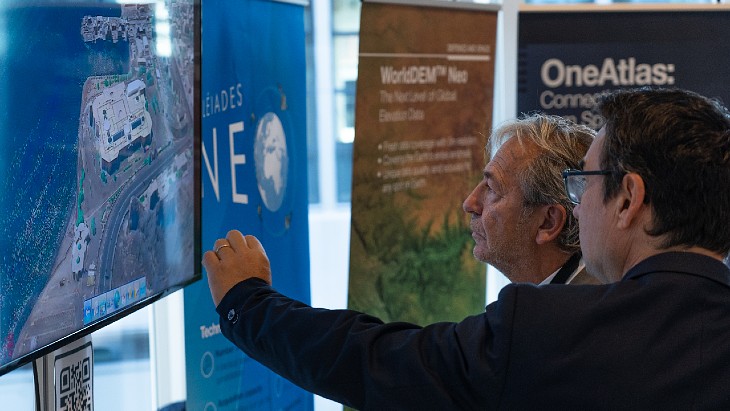
James Scongack, Chair of the Canadian Nuclear Isotope Council (CNIC), and IAEA Director-General Rafael Mariano Grossi - see picture above - discussed the proposed contributions in a meeting in Vienna on Friday.
Rays of Hope is an IAEA intiative which aims to expand access to cancer care and radiotherapy infrastructure to low- and middle-income countries (LMICs). Such countries experience 70% of global cancer deaths but receive just 5% of spending in this area.
The Canadian contribution will include: an isotope production and radiation safety training programme to be primarily hosted at Bruce Power in 2026 to welcome a class of regulators from LMICs to learn about technical fundamentals of nuclear isotope production, processing, and radiation safety culture; a proposed multi-disciplinary technical training programme hosting at London Health Sciences Centre and St Josephs' Hospital, leading Canadian hospitals, that covers hands-on training in radiochemistry and production, radiolabelling, quality control, dosimetry, medical imaging, patient delivery; and the development of an IAEA- and Canadian-made collaboration on e-learning and virtual training packages.
Grossi said: "By combining Canada's strengths in isotope production, processing, and quality control with the reach and expertise of the IAEA Rays of Hope initiative, we are helping countries build the professional competence needed to deliver safe and effective treatments."
Scongack said: "Today’s announcement reflects the next step in our committed, forward-looking partnership between Canada and the IAEA. While we recognise Canada’s current leadership in the global medical isotope community, we also must acknowledge that we face a responsibility to take an active role in supporting increased access to life-changing isotopes for patients around the world."
The CNIC and IAEA have established a technical working group which will work towards delivering the training programmes and e-learning materials towards the end of this year.
Background
Nuclear medicine uses radiation to provide diagnostic information about the functioning of a person's specific organs, or to treat them. Diagnostic procedures using radioisotopes are now routine. Radiotherapy can be used to treat some medical conditions, especially cancer, using radiation to weaken or destroy particular targeted cells. More than 50 million nuclear medicine procedures are performed each year, and demand for radioisotopes is increasing.
Read more:
The World Nuclear Association's Information Paper: Radioisotopes in Medicine
Podcast - In Quotes: Bruce Power's James Scongack
IAEA Rays of Hope


_81127(1)_29377.jpg)

_42570.jpg)