_83572.jpg)
OPAL - for Open Pool Australian Lightwater reactor - reached first criticality on 12 August 2006. Since then, it has supported the production of more than 10 million lifesaving nuclear medicine doses, irradiated over 900 tonnes of silicon ingots and created neutrons essential for enabling 8,000 cutting-edge scientific experiments, ANSTO said.
The 20 MW reactor officially opened in 2007 - here's how WNN reported it at the time. It replaced the HIFAR research reactor which operated from 1958 to 2007. Construction began in 2002, taking just four years to complete. The reactor was designed, constructed and commissioned by Argentinian nuclear technology company INVAP, alongside Australian alliance partners John Holland Construction and Engineering and Evans Deakin Industries Limited. More than 500 people were employed on site at the peak of construction, making it one of the most complex construction projects ever undertaken at the Lucas Heights campus.
_59e0d738.jpg)
Flashback: OPAL's pool is craned in during the construction phase (2002-2004) (Image: ANSTO)
OPAL does not generate electricity: nuclear power reactors are currently prohibited in Australia under federal and state-level legislation. The unit is a research reactor which produces neutrons for scientific, medical and industrial uses. Beams of neutrons produced by the reactor are guided to a suite of sophisticated scientific instruments at the Australian Centre for Neutron Scattering for research in a vast array of scientific disciplines and industry applications including medicine, food, engineering and construction, mining, advanced technologies, energy materials, palaeontology, cultural heritage items, planetary and space studies.
The reactor is also used for irradiation activities, including the production of radioisotopes - including molybdenum-99, the precursor of technetium 99m, one of the most commonly used medical diagnostic radioisotopes. It also carries out the irradiation of silicon to produce specialised material for use in semiconductors.
_a99aec8d.jpg)
A view of OPAL's pool from the bridge: targets for irradiation can be lowered from the bridge into the pool (Image: ANSTO)
ANSTO CEO Shaun Jenkinson said for twenty years, OPAL has arguably been Australia's most significant piece of scientific infrastructure.
"OPAL underpins Australia's enduring nuclear capability, sustaining the expertise, infrastructure and international confidence needed in a changing strategic environment," he said. "It is one of the clearest examples of how nuclear science directly improves lives."
"Every Australian will, on average, require two nuclear medicine procedures in their lifetime. If you or a loved one has undergone a diagnostic imaging scan such as a SPECT scan, it is highly likely the nuclear medicine administered came from Lucas Heights," he added.
"Similarly, if you drive an electric or hybrid vehicle, or have caught a high-speed train overseas, there is a very good chance that a small component of that technology is able to function because of OPAL."
As well as being a major employer in the southern Sydney area, OPAL remains a nationally important asset, supporting sovereign expertise, training the next generation of nuclear specialists, and demonstrating the value of sustained investment in nuclear science and technology, he said. It also has a "crucial role in the training and development of Australia's growing nuclear workforce, including for future national priorities such as AUKUS." AUKUS is the 2021 trilateral partnership between Australia, the UK and the USA under which Australia is set to acquire nuclear-powered submarines.


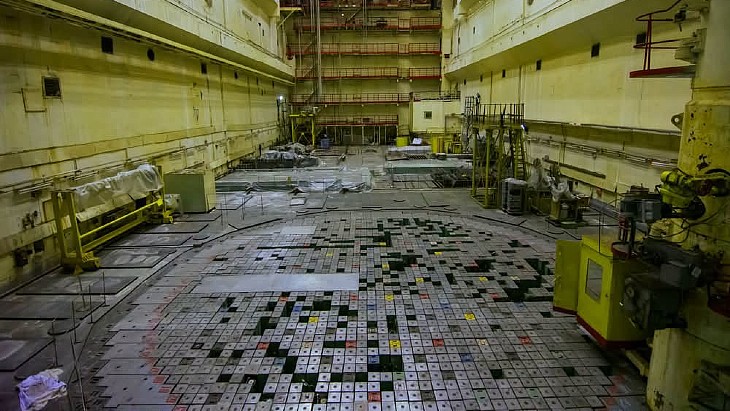
_81351.jpg)
_76441.jpg)
_28347.jpg)
_84289_33276.jpg)

_85344.jpg)