_15584.jpg)
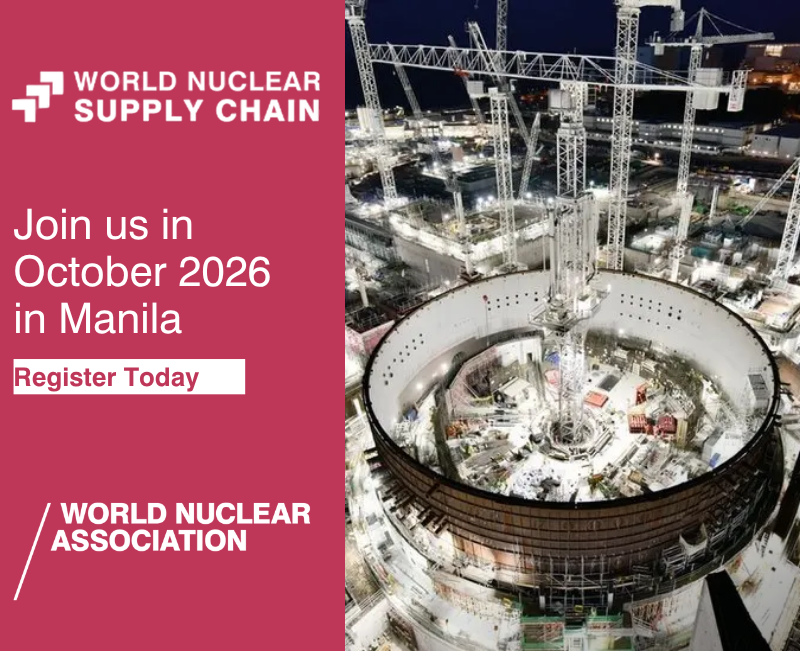
The vessel is the high strength steel cylinder that will house the reactor core and all associated components, including the reactor vessel internals which support and stabilise the core within the reactor vessel, as well as providing the path for coolant flow and guiding movement of the control rods.
CGN said installation of the vessel marks "the beginning of the peak period for the installation of main system equipment in the nuclear island of unit 1 and lays a solid foundation for the orderly progress of subsequent key processes such as the installation of main pipelines".
_fda0dff5.jpg)
(Image: CGN)
Background
The Lufeng nuclear power plant is the first nuclear power project in eastern Guangdong Province. The proposed construction of four 1250 MWe CAP1000 reactors (units 1-4) at the Lufeng site was approved by China's National Development and Reform Commission in September 2014. The CAP1000 design is the Chinese version of the Westinghouse AP1000.
The Lufeng units have not been built in the numerical order their names would appear to suggest.
In April 2022, the State Council approved construction of two Hualong One units at Lufeng as units 5 and 6. First concrete was poured for unit 5 on 8 September 2022 and that for unit 6 on 26 August 2023. The reactor vessel of unit 6 was installed in February this year. Units 5 and 6 are expected to begin operating in 2027 and 2028, respectively.
The construction of units 1 and 2 did not receive State Council approval until August 2024. The first safety-related concrete for the nuclear island of unit 1 was poured on 24 February last year, with that of unit 2 following in December. Both units are scheduled to begin operating in 2030. Approval for units 3 and 4 is still pending.
According to CGN, once all six units are in operation, the Lufeng plant will generate about 52 TWh, which will reduce standard coal consumption by almost 16 million tonnes and reduce carbon dioxide emissions by more than 42 million tonnes.


_33474.jpg)
_37830.jpg)
_85344.jpg)